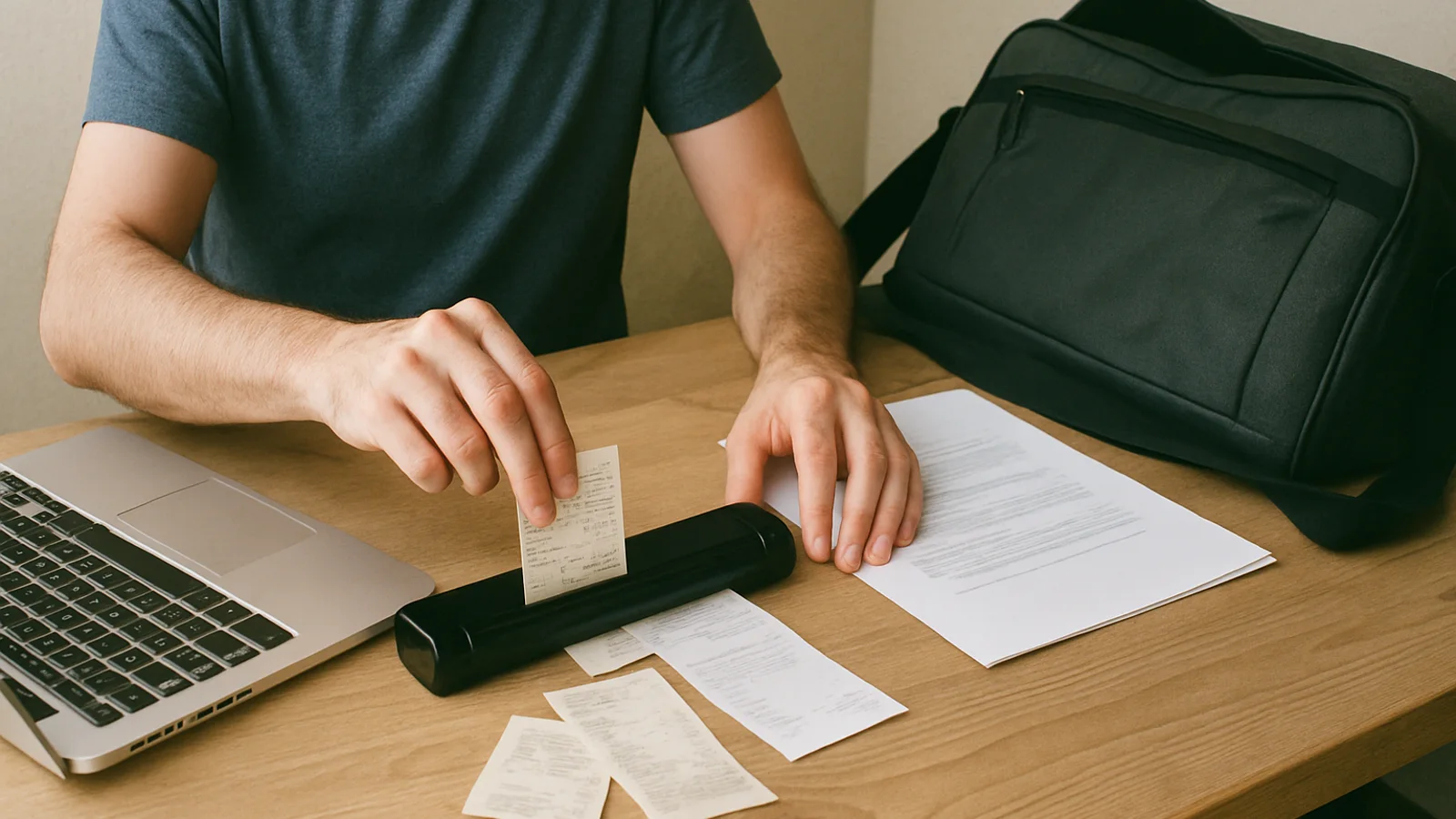
A portable document scanner earns its place when loose paper stops following you around. My practical test is whether it can turn travel receipts, signed pages, forms, and client notes into clean files before they become a second pile on the desk.
For product-level comparisons, I would pair this workflow with LeStallion’s portable document scanner recommendations for remote work and judge each option against your real paperwork.
If you want a shortlist while planning your desk kit, open the best portable document scanner guide and compare feeder style, software, duplex support, and file handling.
Receipts, forms, contracts.
Names, folders, cloud flow.
Power, cable, bag space.
I like to judge portable document scanner buying by the paper you would rather not lose: a signed form, a travel receipt, a client note, or a school document that needs to become searchable before the day gets busy.
1. Start with the documents you actually carry
For portable document scanner buying, begin with ordinary paper: receipts, contracts, forms, sketches, signed pages, and travel paperwork. Those jobs reveal whether duplex support, scan speed, software, or a tiny footprint should lead the decision.
In a plausible remote-work routine, I would scan documents before packing up, name the file while the context is fresh, and keep a small envelope for originals that still need to be mailed or filed later.
2. Decide how much feeder help you need
For portable document scanner buying, begin with ordinary paper: receipts, contracts, forms, sketches, signed pages, and travel paperwork. Those jobs reveal whether duplex support, scan speed, software, or a tiny footprint should lead the decision.
In a plausible remote-work routine, I would scan documents before packing up, name the file while the context is fresh, and keep a small envelope for originals that still need to be mailed or filed later.
3. Make file names part of the workflow
For portable document scanner buying, begin with ordinary paper: receipts, contracts, forms, sketches, signed pages, and travel paperwork. Those jobs reveal whether duplex support, scan speed, software, or a tiny footprint should lead the decision.
In a plausible remote-work routine, I would scan documents before packing up, name the file while the context is fresh, and keep a small envelope for originals that still need to be mailed or filed later.
4. Plan power, cables, and bag space
For portable document scanner buying, begin with ordinary paper: receipts, contracts, forms, sketches, signed pages, and travel paperwork. Those jobs reveal whether duplex support, scan speed, software, or a tiny footprint should lead the decision.
In a plausible remote-work routine, I would scan documents before packing up, name the file while the context is fresh, and keep a small envelope for originals that still need to be mailed or filed later.
5. Keep scan quality practical
For portable document scanner buying, begin with ordinary paper: receipts, contracts, forms, sketches, signed pages, and travel paperwork. Those jobs reveal whether duplex support, scan speed, software, or a tiny footprint should lead the decision.
In a plausible remote-work routine, I would scan documents before packing up, name the file while the context is fresh, and keep a small envelope for originals that still need to be mailed or filed later.
6. Avoid the common portable-scanner traps
For portable document scanner buying, begin with ordinary paper: receipts, contracts, forms, sketches, signed pages, and travel paperwork. Those jobs reveal whether duplex support, scan speed, software, or a tiny footprint should lead the decision.
In a plausible remote-work routine, I would scan documents before packing up, name the file while the context is fresh, and keep a small envelope for originals that still need to be mailed or filed later.
7. Use a final remote-work checklist
For portable document scanner buying, begin with ordinary paper: receipts, contracts, forms, sketches, signed pages, and travel paperwork. Those jobs reveal whether duplex support, scan speed, software, or a tiny footprint should lead the decision.
In a plausible remote-work routine, I would scan documents before packing up, name the file while the context is fresh, and keep a small envelope for originals that still need to be mailed or filed later.
Bottom line
The best portable scanner is the one that turns loose paper into dependable files without adding another complicated chore to remote work.