Duplex and Feeder Choices in Portable Document Scanners
A simple supporting note for better mobile scanning routines.
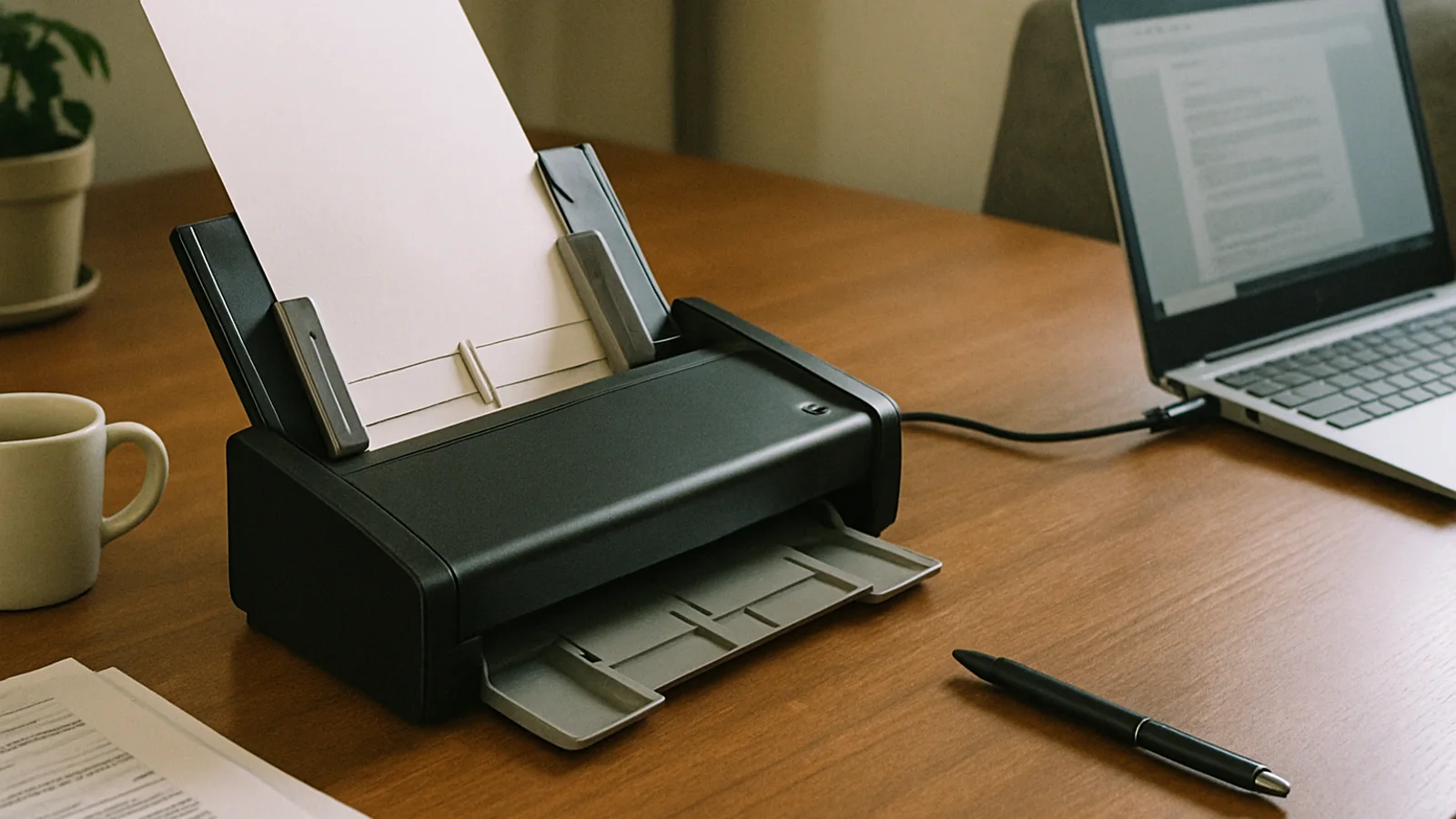
I like to judge duplex and feeder choices in portable document scanners by the paper you would rather not lose: a signed form, a travel receipt, a client note, or a school document that needs to become searchable before the day gets busy.
1. Start with the documents you actually carry
For duplex and feeder choices in portable document scanners, begin with ordinary paper: receipts, contracts, forms, sketches, signed pages, and travel paperwork. Those jobs reveal whether duplex support, scan speed, software, or a tiny footprint should lead the decision.
In a plausible remote-work routine, I would scan documents before packing up, name the file while the context is fresh, and keep a small envelope for originals that still need to be mailed or filed later.
2. Decide how much feeder help you need
For duplex and feeder choices in portable document scanners, begin with ordinary paper: receipts, contracts, forms, sketches, signed pages, and travel paperwork. Those jobs reveal whether duplex support, scan speed, software, or a tiny footprint should lead the decision.
In a plausible remote-work routine, I would scan documents before packing up, name the file while the context is fresh, and keep a small envelope for originals that still need to be mailed or filed later.
3. Make file names part of the workflow
For duplex and feeder choices in portable document scanners, begin with ordinary paper: receipts, contracts, forms, sketches, signed pages, and travel paperwork. Those jobs reveal whether duplex support, scan speed, software, or a tiny footprint should lead the decision.
In a plausible remote-work routine, I would scan documents before packing up, name the file while the context is fresh, and keep a small envelope for originals that still need to be mailed or filed later.
4. Plan power, cables, and bag space
For duplex and feeder choices in portable document scanners, begin with ordinary paper: receipts, contracts, forms, sketches, signed pages, and travel paperwork. Those jobs reveal whether duplex support, scan speed, software, or a tiny footprint should lead the decision.
In a plausible remote-work routine, I would scan documents before packing up, name the file while the context is fresh, and keep a small envelope for originals that still need to be mailed or filed later.
5. Keep scan quality practical
For duplex and feeder choices in portable document scanners, begin with ordinary paper: receipts, contracts, forms, sketches, signed pages, and travel paperwork. Those jobs reveal whether duplex support, scan speed, software, or a tiny footprint should lead the decision.
In a plausible remote-work routine, I would scan documents before packing up, name the file while the context is fresh, and keep a small envelope for originals that still need to be mailed or filed later.
6. Avoid the common portable-scanner traps
For duplex and feeder choices in portable document scanners, begin with ordinary paper: receipts, contracts, forms, sketches, signed pages, and travel paperwork. Those jobs reveal whether duplex support, scan speed, software, or a tiny footprint should lead the decision.
In a plausible remote-work routine, I would scan documents before packing up, name the file while the context is fresh, and keep a small envelope for originals that still need to be mailed or filed later.
7. Use a final remote-work checklist
For duplex and feeder choices in portable document scanners, begin with ordinary paper: receipts, contracts, forms, sketches, signed pages, and travel paperwork. Those jobs reveal whether duplex support, scan speed, software, or a tiny footprint should lead the decision.
In a plausible remote-work routine, I would scan documents before packing up, name the file while the context is fresh, and keep a small envelope for originals that still need to be mailed or filed later.
Bottom line
The best portable scanner is the one that turns loose paper into dependable files without adding another complicated chore to remote work.
FAQ
Who needs a portable document scanner?
Remote workers, traveling consultants, field teams, students, and small offices that need cleaner scans than phone snapshots can benefit.
Is duplex scanning important?
It matters if contracts, receipts, and forms often have information on both sides. Occasional one-sided work may not need it.
What resolution should I use?
For routine documents, practical clarity matters more than maximum resolution. Higher settings help for small print but create larger files.
How do I keep scans organized?
Use a simple file naming pattern, scan to a predictable folder, and move documents into client, project, or date-based folders right away.
Are portable scanners good for photos?
They are mainly document tools. Photo scanning usually needs different handling and expectations.
What should I check before buying?
Power method, feeder type, duplex support, app quality, supported file formats, bag size, and desk space.
Main portable-scanner guide
Use the remote-work scanner guide as the hub while comparing app quality, feeder design, and travel setup.